
How to Mount a TV on Plaster, Brick or Above a Fireplace in an Older San Francisco Home
A TV can be mounted safely on almost any wall in an older San Francisco home, but plaster, brick and fireplaces each need a different method than modern drywall. Nearly one in five homes in the SF metro area was built before 1940 (Axios), so Victorian and Edwardian walls are common here. This guide explains how to tell which wall you have, how each one is mounted, and what to check before putting a TV above a fireplace.
First, find out what your wall is made of
| Wall type | How to recognize it | Common in |
|---|---|---|
| Drywall | Sounds hollow between studs; a pushpin goes in easily | Remodeled rooms, newer condos |
| Plaster and lath | Hard, cold surface; sounds solid in some spots and hollow in others; small cracks are common | Pre-1950 Victorians, Edwardians and Marina-style flats |
| Brick | Visible brick, or a chimney breast covered in plaster | Fireplaces and chimney walls |
| Stone or tile | Natural stone, tile or veneer around a fireplace | Fireplace surrounds |
| Concrete | Very hard; a nail will not go in | Lofts and newer buildings in SoMa, Mission Bay, Dogpatch |
If you are not sure, a quick photo of the wall and the age of the building usually tells an installer enough to plan the job.
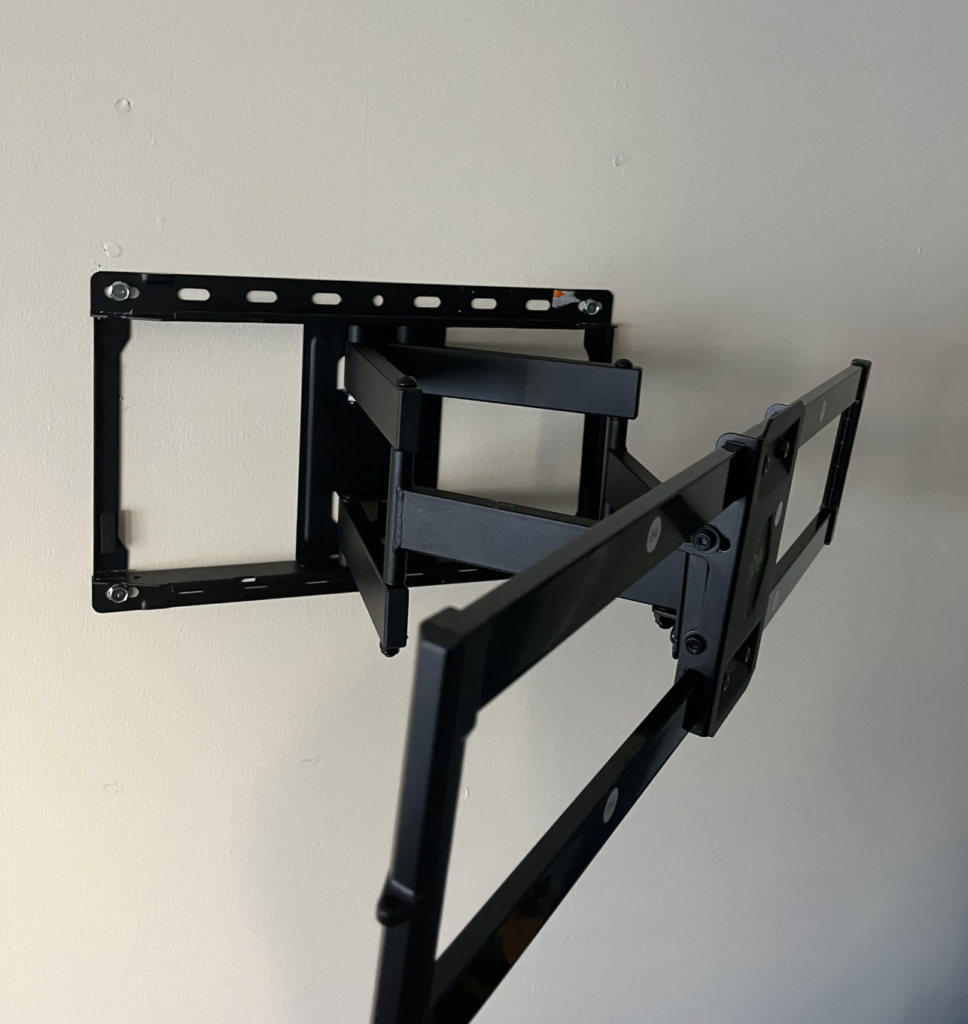
Mounting a TV on plaster and lath walls
Plaster is hard but brittle. Driving screws straight into it can crack the surface, and the thin wood lath behind it is not strong enough to hold a heavy TV on its own (Mantel Mount).
What works:
- Find the studs, not just the lath. Ordinary stud finders often get confused by plaster. Installers combine a stronger magnetic or deep-scan finder with small test holes hidden behind where the mount will go.
- Drill slowly with the right bit. Gentle pressure and painter’s tape over the spot help prevent cracks and chips.
- Anchor the load into wood framing. For anything heavier than a small TV, the mount should be screwed into studs. Where studs do not line up with the mount, a board or plate spanning two studs carries the weight.
- Size the hardware to the weight. A common rule is that total anchor capacity should be at least four times the weight of the TV (Mantel Mount).
Mounting on brick, stone and concrete
Masonry is one of the strongest walls for a TV once it is anchored correctly.
- Drill into the brick, not the mortar. Mortar is softer and can crumble under load.
- Use a hammer drill and masonry anchors such as sleeve anchors or concrete screws, set to the right depth.
- Check for what is inside. Concrete walls can hide conduit and pipes, and chimney breasts may have flues behind them.
- Plan the wires. You cannot fish cables through solid brick, so the options are a slim paintable cable channel, routing cables down through the mantel area, or a recessed box planned before the install.
Because masonry takes more time and different hardware, it usually costs a little more. See our TV mounting price guide for current prices.
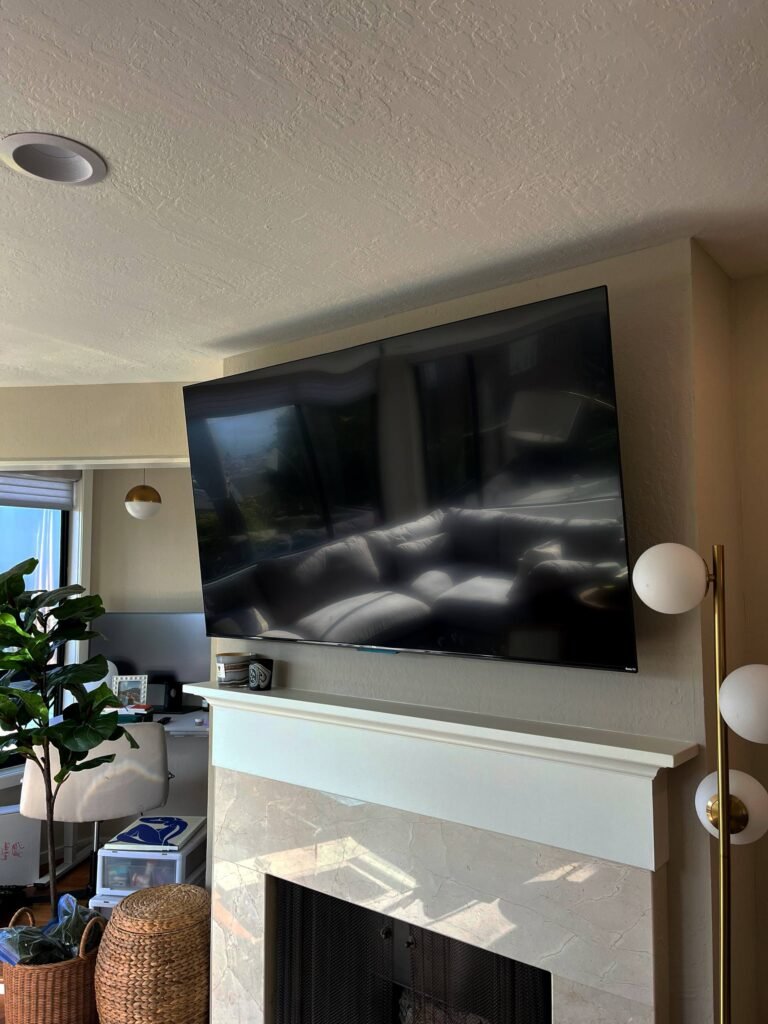
Mounting a TV above a fireplace
The wall above the fireplace is often the only spot that faces the sofa, especially in narrow San Francisco living rooms. It can work well if you check two things first: heat and height.
1. Test the heat. Tape a thermometer to the wall where the TV would hang, run the fireplace for a few hours, then read it. If the wall reaches about 100°F, it is too hot for a TV (Bob Vila). A deeper mantel deflects heat away from the wall. Also check your TV’s manual: some manufacturers do not cover heat damage under warranty. A decorative fireplace or a gas or electric insert may produce much less heat than a wood fire, but test it anyway.
2. Get the height right. For comfortable viewing from a sofa, the center of the screen is usually about 42 inches from the floor. Above a typical mantel, the center ends up closer to 75 inches, which means looking up (Bob Vila). Ways to fix this:
- A tilting or full-motion mount angles the screen down toward the seats.
- A pull-down mantel mount lowers the TV to eye level while you watch and lifts it back up afterward.
- Mount as low as the mantel allows, leaving a small gap for heat.
3. Plan the wires. Most fireplace walls are brick or stone, so cables usually run through a channel along the chimney breast or into a recessed box in a stud wall beside it.
Earthquake safety in the Bay Area
In earthquake country, how a TV is attached matters as much as where. Anchor the mount into studs or solid masonry, never into plaster or drywall alone, and use hardware rated well above the TV’s weight. Lock the arm of a full-motion mount when it is pushed back, and keep heavy items off the shelf directly under the screen.
When to call a professional
- The TV is 65″ or larger
- The wall is plaster, brick, stone or concrete
- The TV goes above a fireplace
- You want the wires hidden in the wall
- You rent and want minimal, clean holes
We mount TVs on every wall type found in San Francisco homes and confirm the price before any drilling.
Frequently asked questions
Can you mount a TV on a plaster wall?
Yes. The mount is anchored into the wood studs behind the plaster, with careful drilling to avoid cracks. Plaster or lath alone should not carry a TV.
Is it safe to mount a TV above a fireplace?
It can be, if the wall stays below about 100°F when the fireplace is on and the TV is angled or lowered for comfortable viewing.
Do you drill into brick or mortar?
Into the brick. Mortar is softer and can crumble under the weight of a TV.
Can you hide the wires on a brick wall?
Not inside solid brick, but a slim paintable channel or routing through an adjacent stud wall keeps them out of sight.
How high should a TV be mounted?
For seated viewing, the center of the screen is usually about 42 inches from the floor.